
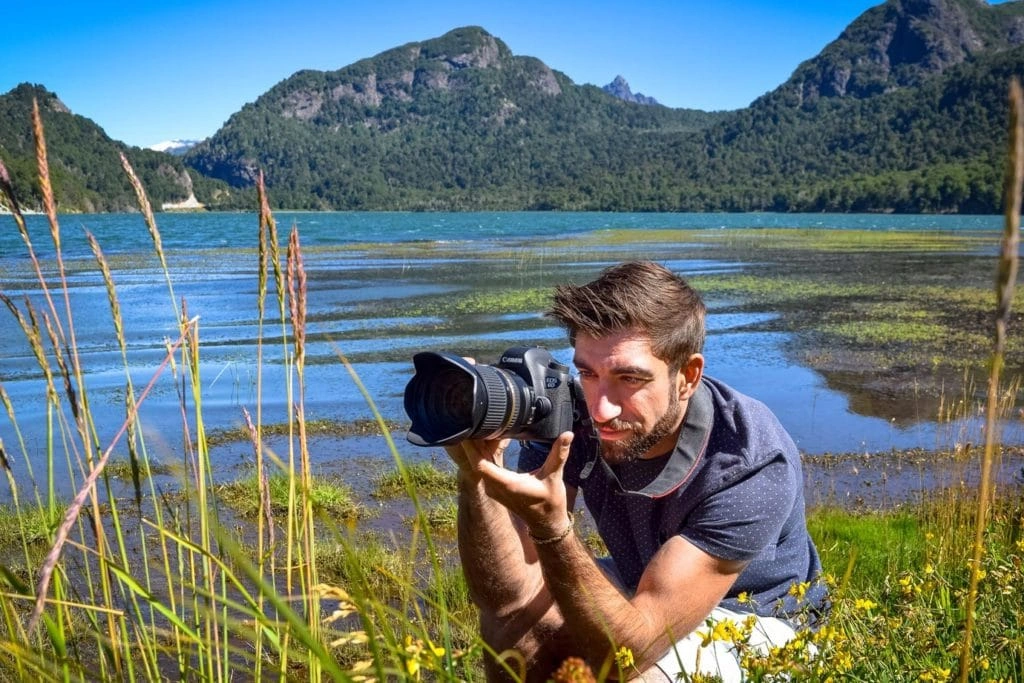
Travel photography lives and dies by two things: being in the right place at the right light, and getting your images somewhere safe before anything can happen to them. The first is craft. The second is workflow — and in 2026 that workflow depends almost entirely on having a reliable data connection wherever your shooting takes you. The photographer who sorts connectivity is the one who never loses a shoot and never misses the moment to share it.
Why a photographer needs data, not just Wi-Fi
It is tempting to assume hotel Wi-Fi will cover you, but the places that make the best photographs are rarely near a good router. You are on a hillside at dawn, in a night market, on a boat, deep in a temple complex — precisely where there is no Wi-Fi and where you most want to back up a card, drop a location pin, check a tide or sunset time, or post the frame while the light is still the story. A personal, reliable data connection turns your phone into the hub of a mobile workflow instead of a paperweight waiting for the next cafe.
Thailand: a case study in shooting connected
Take a shooting trip through Thailand — the temples of Chiang Mai, the chaos and color of Bangkok’s markets, the islands at golden hour. Arriving with a Thailand travel eSIM already installed means that from the moment you land you can back up each day’s take to the cloud as you go, scout locations and opening hours on the move, share a hero shot to your feed while you are still on location, and keep a maps pin on every spot worth returning to. A reliable travel-data provider lets you size the plan to the length of the trip, which matters when you are uploading image files that eat data far faster than casual browsing does.
The connected shooter’s field checklist
· Install your data plan before you fly, so backups start from day one, not day three.
· Back up cards to the cloud daily over mobile data — never carry a full trip on one memory card.
· Geotag and pin locations as you shoot, so you can retrace the best spots later.
· Keep your home number live for two-factor logins to your cloud and social accounts.
· Budget extra data: uploading RAW and video consumes far more than maps and messaging.
Building the mobile backup pipeline
The heart of a connected shooting workflow is redundancy, and redundancy needs a connection. The discipline every travel photographer learns eventually — usually the hard way — is to never let a full day’s work exist in only one place. That means offloading each day’s cards to cloud storage as you go, so that a lost bag, a corrupted card, or a stolen camera costs you inconvenience rather than the entire trip. Set your phone or a small traveling laptop to sync to the cloud automatically, and a reliable data plan turns ‘I hope nothing happens to these cards’ into ‘the images are already safe.’
That pipeline has to respect the reality of file sizes. RAW stills and, especially, video consume data at a rate that dwarfs ordinary browsing, so a plan sized for a casual tourist will evaporate on a serious shoot. Budget generously, prioritize your keepers for immediate backup over dumping every frame, and consider syncing full-resolution files overnight while smaller previews go up in real time. If you tether a laptop to your phone for editing on the road, factor that in too — it is easy to forget how quickly a photo-editing session with cloud sync running eats through an allowance.
The same connection powers the other half of the job: getting the work seen. Whether you are posting to build an audience, sending selects to a client waiting back home, or simply keeping an agency updated, delivery on the road depends on having bandwidth you control rather than whatever the hotel lobby offers. A photographer who can shoot in the morning, back up over lunch, and deliver by evening from a café table is operating at a level that unreliable Wi-Fi simply cannot support. The connection is not a nice-to-have; it is part of the kit.
There is a creative dividend to all this reliability that is easy to overlook amid the talk of backups and bandwidth. When you are not worrying about whether your images are safe or whether you will be able to send them, you shoot more freely. You linger for the better light instead of rushing back to find Wi-Fi. You wander further down the unmarked street, knowing your maps and your uploads are working. You take the risk on the ambitious frame, because a full card is not a liability when it is already syncing to the cloud as you walk. Reliable connectivity, in other words, does not just protect the work you have made; it quietly changes the work you are willing to make, by removing the low background anxiety that otherwise nudges a photographer toward playing it safe. The best travel images tend to come from a certain looseness — a willingness to follow a scene wherever it goes — and that looseness is far easier to find when the boring logistics of storage and delivery have already been handled. Sort the pipeline before you fly, and you free yourself to be the kind of photographer who says yes to the detour.
Never lose the shot — or the moment to share it
There are two heartbreaks in travel photography. One is losing images to a corrupted card or a stolen bag with no backup. The other is capturing something extraordinary and having no way to get it out into the world while it still feels alive. A reliable connection, sorted before you travel, quietly guards against both. It is not glamorous kit — it will never sit on a shelf next to your lenses — but it is the invisible thread that ties a shoot together, keeping your work safe and your audience close no matter how far off-grid the frame takes you. Shoot boldly. Just make sure the images make it home.